Pages

Showing posts with label fear. Show all posts

4 October 2022

Christians and stress (part 2)

Image by Ryan McGuire from Pixabay 

Dealing with stress

Relaxation techniques, attention to diet and exercise, time-management strategies, voluntary simplicity and community building are all valid and useful ways of reducing the stress in our lives. However, as Christians we must also deal with two underlying issues—fear and lack of focus.

Fear

So much of our busy-ness and sense of overload is due to fear; fear of failure, fear of being rejected, fear of loss, fear of illness and death, fear of losing control. Yet often we don't even recognise the fears that drive us. 

Both Christians and non-Christians may be driven by a subconscious fear of God. In the unbeliever this could even be a positive drive. In a Christian, it can only be due to an inadequate grasp of what salvation means. God may call us to be busy for him, but busy-ness can easily become our own attempt to win God's favour, if we don't understand that we are totally forgiven and accepted already. Jesus has completed that task, with nothing for us to add.

The key to overcoming all of these fears is to know what scripture says about them—really know, with our hearts as well as our heads. We can only do this by reading the bible consistently and prayerfully. Then we need to put what we have read into practice, as a conscious act of will. "God is my salvation, I WILL trust and WILL NOT be afraid, (my emphasis). 

Freedom from fear is not something we are likely to achieve in an instant.  Each time we become fearful again, we need to recognise it, ask for forgiveness and grace, then begin afresh. Other Christians are an invaluable and God-given source of encouragement in this.

Focus

Lack of focus in our lives results in us being pulled this way and that by competing demands and desires. We may have many different goals, all of them apparently good, but often quite contradictory. For instance, “I must spend more time with my family” and “I must work as hard as I can to get the promotion I deserve”. As a result we begin to feel fragmented.

Christians are not immune from this. Often we simply add a few spiritual goals to the rest rather than refocusing our lives.

Fear and lack of focus are obviously related. If I fear something (or someone) one of my goals will be to avoid or overcome the thing I fear. If I have many fears, I will have many different goals, and my mental, physical and emotional energies will be scattered in all directions. 

Jesus had focus

Jesus had only one focus in life; the kingdom of God, for the glory of God. He called his followers to be equally single-minded. "Seek first (God's) kingdom and his righteousness, and all these things (i.e. material needs) will be given you as well", (Matthew 6.33).

"Yes, but Jesus didn't have a job, or mortgage, or a family to worry about. He could afford to be single minded," we might reply. I don't think Jesus was calling us to abandon these things (though sometimes he does.) Rather, we are to look at them all in the light of the kingdom of God. 

The work we do is to contribute to building God's kingdom, whether we preach sermons, design cars or wash dishes. Our house is to be a part of God's kingdom, received with thanks, used for his service and given up if he asks that of us. Our children are to be raised for God's kingdom, not by brow-beating them, but by drawing them into it. If they choose to go another way, our focus is still to be God's kingdom. 

Our hobbies, our clothes, our friendships, our money, our possessions, our relationship with our in-laws, our health, all are to be seen in the light of God's kingdom.

When we look at Jesus' life, as described in the gospels, we can see the effects of being focused. Jesus had compassion on the crowds who followed him about, and healed many who were sick. Yet at times he would walk away from them in order to pray or teach his disciples. He was not driven by a need to be popular, or to (literally) cure all the world's ills. 

Jesus did not try to do everything himself. He taught his disciples, then sent them out in pairs to teach and heal. He shared his concerns with them. He entrusted the future church to them. He was not driven by the need to keep power to himself or to appear super-human.

Jesus had no hesitation in openly criticising or correcting those who were straying from the truth. He continued his ministry despite the growing opposition of the authorities. Fear of man did not come between him and his goal of bringing about the kingdom of God.

In prayer Jesus maintained the same focus. "Father, may your name be hallowed, may your kingdom come, may your will be done," (Matthew 6:9). The needs of the day followed on from this, not as though they were trivial, but placed in their true context. "Give us this day our daily bread." Through prayer, Jesus received the strength and direction he needed to stay focused.

Jesus certainly didn't live a gentle, stress-free life. He experienced tiredness, grief, pressure from the crowds, misunderstanding from his disciples, harassment from the religious authorities and ultimately betrayal, torture and death. Yet always he seemed to be in control, steady in his purpose and sure of where he was going. His resurrection is our assurance that in the end he reached his goal.

Being focused in this way, while it may seem difficult at first sight (and impossible without the help of the Holy Spirit) would surely enable us to simplify our lives and overcome the fragmentation we so often experience.

Perhaps that is what Jesus meant when he said "Come to me, all you who are weary and burdened, and I will give you rest. Take my yoke upon you and learn from me, for I am gentle and humble in heart, and you will find rest for your souls. For my yoke is easy and my burden is light." (Matthew 11.28-30.)

(Part 1 can be found here)

Christians and stress (part 1)

(This article and the one that follows were written many years ago. I've decided to republish them here in the hope that they may be helpful to someone.)

Image by Gerd Altmann from Pixabay 


What is stress?

In physics, "stress" can refer to the pressure applied to an object, or it can describe the internal resistance of the object itself. When people speak of being "stressed" there is a similar ambiguity. 

Stress, in the sense of an applied pressure, is not always detrimental. Stress can motivate us to begin and complete tasks. However, what most people mean by "stress" is a sense of being overwhelmed and overloaded. They feel as if their internal resistance is at breaking point.

Life has been difficult for most people throughout history. We could dismiss the view that our own lives are increasingly stressful as trendy self-pity. Yet the social and personal cost of stress is great.

What causes stress?

In simple terms, when we are threatened or in danger, our bodies produce chemicals which prepare us to put up a fight or run away - the so-called fight or flight reaction. 

When the "threat" is an irate customer, a pile of files or a whining child, neither fight nor flight is usually appropriate. So we experience the effect of these chemicals but not the relief of responding to them. What's more, we can learn to feel stressed just by thinking about stressful situations. 

Triggers of stress in our twenty-first century, western lifestyle are many, but include:

  • Busy-ness. By the age of four, today's child is likely to be in constant motion, from kindergarten to kindy gym, from music lessons to child care. By the end of primary school, home might well be little more than a place to sleep.The pace is set for adult life.

Christians are certainly not immune from busy-ness, as they try to fit church commitments, bible study and prayer into their already busy lives. Dreams of escaping to a monastic life are not uncommon! Most people realise that they are "too busy", but deciding what activities to cut back is not easy.

  • Technological speed. If our activities were limited to those we could carry out within walking distance of home, most of us would have much quieter lives. Our cars allow us to travel long distances in relative comfort, but contribute to our stress. Telephones, fax machines, computers and email also add to the speed of life. 
  • Information overload. Most people in the past relied on word of mouth for their information. Much of it was inaccurate, but they had time to integrate what they heard into what they already knew.

Today we are bombarded with information. If we don't recognise that much of it is irrelevant or inaccurate, and learn to be selective, we can feel overloaded and guilty for not keeping up. 

Since good news doesn't sell, we are exposed to a very slanted view of the world through the media. We can become depressed about situations which have no bearing on our own lives and which we can do nothing about.

  • False expectations. Many people in the post-war generation grew up believing that, with work and determination, they could be anything, do anything and have anything they chose. Real life, while being better than most previous generations could have dreamed of, is still disappointing.

In contrast, the following generations often have a sense of hopelessness about the future. The threat of nuclear weapons, pollution, social decay and a belief that life ends at death all rob their efforts of any meaning. They feel as if they are going nowhere.

  • Social isolation. We may be able to communicate instantly with almost anyone in the world , but we often have little time to spend face to face with people. Many of our interactions, even with those closest to us, stay at a superficial level. Our mobility prevents us from getting to know our neighbours. As a result, when we're feeling stressed, we have few people to support us, and those who do often feel overloaded themselves.
  • The burden of possessions. Compared to most of the world's people, we are materially blessed. However, every purchase we make adds an extra demand on our time to maintain it. We also have to find somewhere to keep it. The more expensive the item, the more likely we are to be anxious about it being stolen or broken.
  • The shrinking of time. The smallest period of time mentioned in the bible is an hour. Now we speak blithely about athletes taking 2/100ths of a second off a record. 

People in the past viewed time as something which was created as they lived. It couldn't be "gained" or "wasted". In contrast, we see time as something with a reality of its own, already subdivided into milliseconds and waiting for us to fill it. This puts us under constant pressure to keep up with the clock. The quest for increased productivity has added to this pressure.

  • Change. Our nervous systems constantly monitor the world around us. However, our brain only stays consciously alert to things which are changing. (For instance, we don't notice how our clothes feel most of the time.)

We are also unable to focus our attention on more than one thing at once. In order to stay alert to two or more things, we have to switch our attention back and forth.

If we live in an environment which is noisy and fast-moving, we place great demands on our nervous system and brain. It is not surprising that we become jumpy, forgetful and have difficulty concentrating. 

Constant change has been a key feature of the twentieth century. Some changes are superficial. Others have been more profound. The improved status of women, new ways of raising children, altered attitudes to authority and concern about the environment have had a deep effect on how we live and relate to each other. For many, the lack of certainty created by change is stressful. 

In our society it's difficult to avoid all of these pressures (and there are no doubt others). Yet Christians often add another stress of their own—guilt about feeling stressed! They feel that as Christians, they should be living peaceful, stress-free lives. Otherwise, how will they be a living witness to Jesus?

It's true that if we deal with stress by using drugs or alcohol, or by abusing our family, we will not be much of an advertisement to others. Nor are we likely to be believed if we pretend to ourselves and others that we don't experience the same pressures as other people. 

That is not to say that we should make a virtue of being stressed. Paul only "boasted" about his sufferings in order to make a point. (See 2 Corinthians 11:16-30). What we really need is to recognise the stresses in our lives and find constructive, godly ways to deal with them. 

6 May 2020

Leaping in the dark

Are you afraid of letting God get a grip on you? Do you stand at a distance, too scared to let him get close? Do you fear what he might do with you, or ask you to do, if you handed over your life to him?

In one sense, we should all be afraid of God. We should never underestimate his power and awesomeness. It is a dreadful thing to fall, unprepared, into the hands of the living God.

But it's not this reverent fear which holds many of us back from putting ourselves fully in God's hands. Our fear comes from other sources.

Some fear losing control. They've had unpleasant experiences of being controlled and manipulated by others. Perhaps they've been through a time where life was chaotically out of control and they've vowed (often subconsciously) never to let that happen to them again. They want to believe God can be trusted, but there's a dreadful emotional barrier in the way.

Some would like to be closer to God, but they're already committed to serving someone or something else - their career, their reputation, their parents or spouse, an ideology, an organization or a secret society. They're unwilling to depose their idol, and God allows no rivals.

Half-heartedness is sometimes a mask for laziness. While I continue to serve God on my terms, I can set limits to how much time and effort I give him. Being a paid servant is one thing, becoming a slave of Christ is quite another. But fear can also cause half-heartedness - what if God asked me to do more than I could cope with? What if I never achieve the things I want to achieve because I'm too busy doing God's work?

Satan uses our fears to keep us at a distance from God. He tells us God doesn't have our best interest at heart. He keeps the word "fanatic" fresh in our minds. He holds us over a dark abyss and whispers "This is faith. Do you really want to jump?"

Jesus calls to us, "Follow me". But where? What will happen along the way? Putting all our trust in him can seem like a leap in the dark, until we understand how he proved his trustworthiness on the cross. If you are afraid to trust your life to God, or know that he's asking you to trust him more, talk to another Christian about it and ask them to pray with you. The only truly safe place in the universe is in God's hands.

Photo by Mitchell Hartley on Unsplash

1 April 2019

What does it mean to trust God?

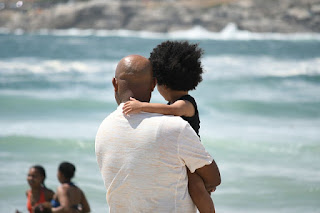
Father and child

Trust is important in any relationship. But there are two levels of trust. The first involves our expectation that the other person will do us good rather than harm and will carry out what they say they will do. Over time we learn whether or not to believe the things they promise.

The second, deeper, level of trust involves our sense of safety when we are with them, and our willingness to reveal ourselves to them. We all long to be known deeply by someone. Yet life teaches us to be wary of exposing our real selves to anyone, in case they use that knowledge to harm us. It takes a great deal of trust to reveal our most intimate selves to another.

Our relationship with God involves both types of trust. As we step out tentatively in faith, we learn through experience that God will do what he has promised. He has our best interest in mind. Sometimes we go through painful experiences which seem to make no sense. Only in retrospect do we see how God was working for good. Such experiences help our tentative faith to grow into a deeper trust in God's goodness.

But trusting God also means trusting that he is safe to be with. It means being sure that if we approach him, he won't overwhelm us. If we reveal our true selves to him, he won't turn on us in anger, or disapproval, or scorn.

Almost the first thing we learn about God is that he knows our every thought, word and deed (Ps 139). That could be frightening to know. Yet our assurance as Christians rests on the fact that there is no condemnation in Christ Jesus (Rom 8.1). God knows all there is to know about us, and yet he loves and accepts us.

But how well do we know this? I suspect that most of us cope with the idea of God knowing us intimately either by reducing God to something less than he really is, or by attempting to hide certain parts of ourselves from his gaze. The more we learn of the awesomeness of God, the less inclined we feel to be known by him. That is, until we really come to believe, with our hearts as well as our minds, that he is to be trusted. Being fully known by God then becomes a source of joy and strength rather than a fearful thing.

Image by Bob Marjawar from Pixabay  This article originally appeared on "One Candle", my former website. It may be copied (without alteration) for non-commercial use, but please acknowledge its source.

20 April 2018

Are you more like Timorous, or Mr Fearing?

Timorous and Mr Fearing are two of the characters described by John Bunyan in his allegorical story, The Pilgrim's Progress. Despite the similarity of their names, they have rather different personalities, and come to very different ends.
The Pilgrim, Christian, meets Timorous and his companion Mistrust at the top of the Hill of Difficulty. Unlike Christian who is heading for the Celestial City, Timorous and Mistrust are going the other way. Christian asks "why?" After all, they have already come some way in their journey and struggled up the Hill. Why not keep going? 
Timorous replies "The further we go, the more danger we meet with." He's seen the dangers ahead, he's had enough, and he's going back to the easy life he had in the world. He was never really committed to reaching the Celestial City.
Mr Fearing also falters at every danger and opposition he meets. But unlike Timorous, he stands his ground, quaking, until he finds the courage to go forward. His journey to the Celestial City is slow and painful, for his companions who have to bear with him as well as himself. Yet the Lord seems to take special care of him. And in the end he arrives at his goal.
Two things distinguish Mr Fearing from Timorous. The first is his determination to reach the Celestial City. No matter what lies ahead, he won't turn back, even if he fears going forward. The second is that his greatest fear is not danger or discomfort, but making mistakes. He often missed out on the joys of being a pilgrim because of his lack of assurance. Yet he sometimes showed remarkable courage and spiritual strength.
Bunyan was an astute and experienced pastor. He recognised that Mr Fearing's problem was not that he lacked the will to be a Christian, but that he carried with him a personal weakness. Bunyan also observed that the Lord seemed particularly gentle with such people.
None of us ought to be like Timorous, giving up too soon. No doubt we would all like to be like Great Heart, Faithful, or Valiant-for-Truth - Christians who do great things for the Lord and seem to fear nothing. Yet if we feel like Mr Fearing, we can be assured that God still has a place for us in the Celestial City and will see that we get there.

12 June 2017

Holding on to faith

Most of us have probably wondered at some stage whether we can really go on being a Christian until the end of our lives. Our faith seems so weak and wobbly at times.

Perhaps we’ve struggled with doubts about certain doctrines, or felt puzzled and disturbed by something we've read in the Bible. Maybe we’ve tried to share the gospel with others and found ourselves flummoxed by their questions or their negative response.

Or perhaps we’re disheartened by our own lack of discipline in Bible reading, prayer and service. We determine to do better, but soon we get distracted by other things. Some distractions we have no control over, like illness in the family, but sometimes we’re way-laid by trivia. We begin to fear that we’re back-sliding so fast that soon we’ll be unable to hold on to our faith.

Christians in many parts of the world face much harsher threats to their faith. Their fear is that they may denounce Christ under torture, or hide their faith in order not to lose their livelihood. In comparison, our fears seem pathetic. But they are real, nevertheless. We’ve all met people who once were Christians, who now disclaim their faith. We don’t want to become like them.

The fact that we do fear losing our faith is actually reassuring. It’s a sign that the Spirit is still at work within us, otherwise why would we care? But how will we remain faithful?

It’s humbling, yet also heartening, to realise that in the end we remain in Christ because he who called us, and gave us faith to believe in him in the first place, continues to call us and give us faith. He gives us the faith to read, to understand, to pray, to act. He holds onto us when our thoughts are scattered or dreadful, when our reading and praying seem hollow, when we’re weary of doing good. (Phil 1:6)

And he provides faithful people around us to pray for us, and encourage us to keep going. The greatest prayer we can pray for another Christian is “Lord, preserve their faith”.

7 April 2017

Worthy to be insulted

We all need encouragement to keep doing what we’re doing. As a writer, I’m encouraged to go on writing when someone tells me that something I’ve written has been helpful to them. Teachers are encouraged when their students do well in their exams. Trades people are encouraged when a customer recommends them to someone else, not just because of the promise of more work, but because it shows that the quality of their work is appreciated.

But what should encourage us as Christians to keep on striving to lead Christian lives? We might answer something like “seeing many people converted” or “receiving answers to prayer”. Jesus gave a very different and rather strange answer to the question.

He said we should be encouraged when we are persecuted. In fact we should rejoice when we are persecuted for his sake, because it shows that our lives are producing the same effect as those of the prophets and our reward awaits us in heaven (Matt 5:11-12). Peter, in his letter to the churches, said that being insulted for the name of Christ shows that the Spirit of God rests upon us. (1 Peter 4:14)

Of course it’s possible to be ‘persecuted’ for being a self-righteous busybody or a bully. Jesus spoke specifically of being falsely accused of evil for his sake. But if we are endeavouring to live Christ-like lives, being merciful, faithful, loving, forgiving and fearless, and yet find ourselves rejected and excluded because we are Christ’s people, we can rejoice and be encouraged to continue. Like the disciples in Acts 5, we are being counted worthy to suffer dishonour for his name.

9 March 2016

No goodbyes

"I am with you always, to the very end of the age". (Matt 28.20b)

A few days before she was to start kindy, a little girl began insisting that her mother should let her walk there on her own on the very first day. This seemed rather strange, so her mother tried to find out why it was so important to the child. Eventually the little girl said “Well, if I go on my own I won’t have to say goodbye to you when you leave”. 

We all dislike saying goodbye and being separated from those we love. Yet it’s an inevitable part of life. Friends move away to work in another city, children leave home, sometimes war or persecution drives people apart. The ultimate separation is death, which removes even the possibility of being re-united or keeping in touch. There are no emails or Christmas letters from beyond the grave.

Some find any separation so painful that they become demanding and cling to those who love them. Others build walls around themselves and pretend that they don’t care. But we’re made to be in relationship with other people. We can’t avoid the pain of separation if we want to be human.

Only someone who will never die can promise that he will never leave us or forsake us. Only one who has eternal life could keep such a promise. That one is Jesus. He won’t tire of us and go off to find someone who is better at getting their Christian life together. He won’t abandon us because he has more important things to see to. Death cannot separate us from him. When separation from those we love seems overwhelming, he is there with us, a constant presence in our lives.

31 October 2015

For all the saints?


In the church calendar October 31 was traditionally All Hallows Eve, the evening before All Saints Day on November 1. It was a time for remembering the dead, both the saints and martyrs (”the hallowed” or holy ones)and loved ones who had died. It may have been timed to coincide with an older pagan festival which marked the onset of winter, although originally All Saints day was in May.

Many ancient cultures believed that on one day of the year the souls of the dead visit this world. Food and drink would be provided to welcome these visitors. Others believed that the unhappy souls of those who had died wandered the earth, or that evil spirits might try to gate-crash the party, so rituals were devised, such as wearing costumes and masks, to ward them off.

In Europe in the Middle Ages, children would go door to door collecting specially baked “soul cakes” in exchange for saying prayers for the dead. During the Reformation the idea of praying for dead souls was dismissed along with the concept of purgatory, but that did little to dampen popular enthusiasm for ancient practices. In England in the 1960’s, “mummers” with blackened faces still came to the door offering to drive evil spirits from the house by humming, for a small donation. Trick or treat is nothing new!

Many Christians see Halloween as a pagan festival that has more to do with Satan than with Christ. Others reject the commercialism or are concerned about the safety of children, physically or spiritually. But how might we find creative ways to remember and reflect on the lives of those who went before us? Rather than condemning our neighbours for their fascination with death, how might we demonstrate in a positive way that Christ has overcome death and Satan?

8 December 2014

The Lord will be my light

Do not gloat over me, my enemy!
Though I have fallen, I will rise.
Though I sit in darkness,
the Lord will be my light. Micah 7.8


Dungeons are traditionally dark, windowless places. That's no accident. Except for those born blind, human beings find being in the dark for any length of time disturbing. We rely so much on our vision to make sense of the world. Keeping a prisoner in complete darkness is a sure way of torturing their mind and breaking their spirit.

Sometimes life itself seems to become a dark and dreary dungeon. We can't understand what is going on. Our personal lives are shadowed by illness, loss and loneliness. The world around us is dark with disasters, wars, cruelty, threats and human suffering.

This is as true for Christians as it is for anyone else. In fact it can seem worse for Christians. Where is God in the darkness around us? Why is he allowing us to suffer such confusion and disorientation? In those times we are likely to hear a voice whispering to us "God doesn't care! He can't help you. Are you sure he even exists?"

To recognise these whispers as the voice of an enemy, the enemy, rather than our own, is a great relief. To summon the courage to say "I don't know why this is happening, but I know that God is trustworthy and I will wait for him" is often the turning point in our troubles. It's like finding a candle suddenly shining in the darkness. The dungeon doesn't disappear, but we're no longer afraid of the dark.

8 November 2014

Don't be alarmed

People have been predicting the imminent end of the world and Jesus' second coming since his ascension. Some of these predictions have been based on supposed prophetic visions or dreams. Others have focused on auspicious dates such as the years 500, 1000  and 2000 AD. Calculations based on the book of Revelation have produced a wide range of dates, most of which have already passed by uneventfully.

Cataclysmic events such as the sacking of Rome (410 AD), the bubonic plague  in 1347-53, and the wars of 1914 and 1939 have also prompted people to  predict the imminent end of the world. Anxiety being created today by various crises internationally is likely to lead to a rise in end-of-the-world forecasts.

The Bible restrains us from making such predictions or becoming anxious about them. For one thing, it provides a record of wars, famines, plagues and disasters spanning over 2000 years. Whatever dreadful thing is happening in our world today, we can be sure to find something similar in the history described in its pages. "There is nothing new under the sun" (Ecc. 1:9). In all these events, God remains sovereign.

Secondly, we have Jesus' words in Matthew 24:6-8 "You will hear of wars and rumours of wars, but see to it that you are not alarmed. Such things must happen, but the end is still to come. Nation will rise against nation, and kingdom against kingdom. There will be famines and earthquakes in various places.  All these are the beginning of birth-pains." What midwives call "practice contractions" in other words.

Jesus assures us that when the end does come and he returns it will be both sudden and obvious. In the meantime may our response to what is happening in the world be compassion and prayer for those affected, trust and steadfastness in our own situation.

Image: by tarotastic / photo on flickr

8 September 2014

The violence of the Old Testament - Part 2

(Thursday thesis)

This is the second part of a series on violence in the Bible, particularly the Old Testament. Part 1 can be found here. And yes, I know it's not Thursday, I'm posting this late.

Two options that don't work

Ignoring the violence of the Old Testament isn't an option for several reasons. First, it suggests that we’re afraid of what conclusions we might come to if we did face it. We’re afraid that our image of God and the way he works might have to be revised in ways that we’re not comfortable with. We’d rather stick with the censored Bible and the blurry image of God we’re familiar with.


But living in fear of discovering the truth isn't healthy, psychologically or spiritually. It puts us constantly on guard against anything that might disturb our carefully constructed version of truth. It means that our faith is not really placed solidly on the God of the Bible, but on an idol of our own construction. We’re creating our own cannon of books and passages that are acceptable to us.

If the God of the Bible really is a cruel and sadistic monster, as the New Atheists suggest, then we should be right to reject him as they do. But not bothering to find out whether it’s true or not seems bizarre. Hoping that it isn't true is not faith but wishful thinking.

Ignoring the violence of the Old Testament also ensures that we live in fear of other people questioning us about it. We’ll find ourselves unwilling to invite people to church or our Bible study group if we know that one of the ‘difficult’ passages from the Old Testament is going to be read. We’ll avoid suggesting that people read the Bible for themselves, or point them only to the New Testament. We’ll look embarrassed and give a half-hearted answer when we are questioned about difficult passages. Fear will kill our desire to evangelise, or lead us to offer a short and sweetened version of the gospel.

Ignoring the violence of parts of the Old Testament means that we’ll have no biblical way to understand the violence in the New Testament or in the world around us. The crucifixion will be a jarring aberration in an otherwise peaceful landscape. The final judgement scenes in Revelation will seem out of place. The lavender-scented version of the world that comes from our edited Bible won’t match up with a reality where war, brutality, rape, domestic violence, murder and a host of other evils are on display daily.

30 May 2014

Doubting Thomas

Now Thomas, one of the Twelve, called the Twin, was not with them when Jesus came. So the other disciples told him, “We have seen the Lord.” But he said to them, “Unless I see in his hands the mark of the nails, and place my finger into the mark of the nails, and place my hand into his side, I will never believe.”  
John 20:24-25 (English Standard Version)

I once thought of Thomas as someone with a sceptical outlook on life - a first century scientist who looked for evidence to support his hypotheses. I assumed he was like the many people I know who reject the Christian gospel because (they assume) there is not enough evidence to support it.

But these are people looking at Christianity from the outside. Thomas was not like that. He'd lived alongside Jesus for three years. He'd watched Jesus, listened to him, learned so much about him first hand. He'd been as committed to following Jesus as any of the disciples. When Jesus set out on his last journey to Jerusalem, it was Thomas who had urged them, "Let's go and die with him".


Detail from Carl Heinrich Bloch "Doubting Thomas"
Nor was Thomas like the Pharisees who wilfully disbelieved Jesus because he threatened their own position. As Jesus had predicted in his story of Dives and Lazarus, they would not believe even though someone were to return to them from the dead. (Luke 16:31) Thomas wasn't refusing to believe whatever evidence might be presented to him. He was adamant that he would only believe if he saw for himself, but later, having seen, he believed whole-heartedly.

Why did Thomas refuse to believe the words of ten men who were all well known to him? The other disciples had not believed the women who brought the news of the resurrection. "It seemed an idle tale to them", something the women, in their emotional turmoil, had dreamed up. The word of a woman was not admissible as evidence in a Jewish court, and no doubt the disciples had something of this attitude still with them even after spending three years with Jesus. But the word of two men had authority, and here were ten men all in agreement.

The disciples were no doubt so excited that they could hardly get the words out, as they told Thomas that they had seen the Lord. They must have told him, too, about Jesus showing them the wounds in his hands and side. Yet their collective enthusiasm and explanation didn't persuade him. Thomas insisted, “Unless I see in his hands the mark of the nails, and place my finger into the mark of the nails, and place my hand into his side, I will never believe.”

Other versions of this verse say "I will not believe". Either way, Thomas is quite emphatic. Nothing anyone can say will ever persuade him that Jesus has risen. Only seeing the evidence in front of him will make him change his mind.

It's difficult and risky to draw conclusions from the few sentences we have about Thomas. Yet there seems a definite movement in Thomas' attitude to Jesus in John's account, from the courageous commitment he showed on the road to Jerusalem, through the confused questioning in the upper room, to this determination not to believe without seeing for himself.

This willful doubting of Thomas is often taken as an example of arrogance or stubbornness towards Jesus. But could it be that Thomas' is guarding himself from further hurt and confusion? Is his refusal to believe perhaps a means of protecting himself from being disappointed and mistaken again, a case of 'once bitten, twice shy'?

It would seem, from his words in the upper room, "Lord, we don't know where you are going, so how can we know the way?" that his recent determination to follow Jesus to his death was based on a less than accurate understanding of what Jesus was going to do in Jerusalem. He thought he knew where Jesus was going and why, but somehow what Jesus said in that last conversation with his disciples rattled Thomas. There's a desperation, almost exasperation in his question "How can we know the way?"

Then came the furtive arrest, the mockery of a trial and Jesus brutal death. Thomas did not go to his death with Jesus after all, he fled with the other disciples. Like Peter with his broken promise to remain with Jesus, Thomas had more on his mind in those days after the crucifixion than just his grief at the loss of a good friend and teacher. He was surely struggling with guilt at his own act of betrayal, and a continuing sense of confusion and disappointment.

Detail from Rubens
 "The incredulity of St Thomas"
There are many people like Thomas. Once upon a time they were deeply committed Christians who sincerely thought that they would go to great lengths, even to death, for the Lord and the gospel. They were the Youth workers in their churches, the best students in theological college, the people everyone knew was destined for the mission field or a great preaching ministry. Then something happened that stopped them in their tracks. Perhaps it was a tragedy in their own lives or the life of someone close to them. Perhaps it was a bitter, destructive conflict in their church, or the moral failure of someone they looked up to as a model and mentor.

Suddenly the gospel they thought they understood no longer made sense, it didn't help them describe what was happening, it didn't cover their wounds. At that point they decided that the only way they would be able to go on believing would be to have evidence that the gospel was really true. In the past they had believed because of what they heard and read, but now other people's words are not enough. Now they need evidence from Jesus himself. In order to protect their shattered confidence, they will not believe unless they see.

Yet they also struggle with their own shame at having promised so much and then walked away. Their pride has to deal with the fact that they've spent years trying to convert others, and now they no longer believe themselves. They look back on their past enthusiasm with embarrassment. This only adds to their determination not to go this way again without strong evidence. The merely wounded might declare that they cannot believe, the shamed insist that they will not.

The risen Jesus deals with the failings of each of his disciples gently, graciously, personally. He doesn't issue a blanket pardon. In fact, he doesn't actually rebuke any of them for their abandonment of him. He takes Peter aside on the beach and by asking three times "Do you love me" allows Peter to undo each of his three denials of him. How, then, does he deal with Thomas?

It's strange, really, that Jesus appeared first to his disciples when Thomas was absent. He could surely have arranged things so that all eleven disciples were together. John's account makes it sound as though Thomas arrived not long after Jesus left. That raises the question, did Jesus actually intend for Thomas to be absent on that first occasion? And if so, why? And why wait eight days before appearing again with Thomas present? We're not told.

We can imagine what those eight days must have been like for Thomas, with the other disciples all insisting that they'd seen Jesus and all talking about what they had seen, what he had said, what they had felt, what it could mean. Like the odd man out on a jury deliberation, he must have felt some pressure to accept what they were saying. Yet he apparently continued to insist on withholding belief until he saw the evidence for himself. Did Jesus wait those eight days, hoping that Thomas would change his mind? Or did he have some other intention in waiting?

Caravaggio "The incredulity of Saint Thomas"
When Jesus did appear, dramatically through a locked door, he wasted no time in speaking to Thomas. And he knew exactly what Thomas had been demanding. “Put your finger here, and see my hands; and put out your hand, and place it in my side. Do not disbelieve, but believe.”  With Jesus standing in front of him, Thomas surely didn't need to put his fingers in the nail holes to believe, but Jesus meets the full demands of Thomas unbelief. He holds out his hands to him.

Written dialogue does not always convey the tone in which something is said, nor the expression on the face of the speaker, and John does not tell us how Jesus spoke these words to Thomas. Often the verse is read as a stern rebuke or a command "Do not doubt!" and the words are used to warn those whose faith is wavering that doubt is not acceptable to Jesus.

These words could just as easily be said gently, compassionately, perhaps even ironically. "Don't be doubting, but believe". The original Greek text could be literally translated "Don't become disbelieving". Jesus loved Thomas just as he loved each of his disciples. He understood Thomas better than Thomas understood himself. Jesus' living presence in the room was rebuke enough to someone who had been denying that possibility.

Again, we can ask why John recounts this episode about Thomas in his gospel. In Luke's account of Jesus appearing to his disciples, Thomas is not mentioned by name. Instead, Jesus says to all of his disciples "Why are you troubled, and why do doubts arise in your hearts?" (Luke 24:38) Then he shows them his hands and feet and invites them to touch him.

It is often said that this incident with Thomas is included by John to encourage those who have come to faith in Jesus through the witness of the apostles (directly, in John's day, or indirectly through scripture since then.) They may not have seen the risen Lord Jesus, but Jesus himself said that those who believe without seeing are 'blessed'. (John 20:29)

But if the emphasis is on  the blessing of believing without seeing, why not provide an example of someone who did believe solely on the word of the disciples. And why single out Thomas as the doubter, when John says none of the disciples believed the women's account, and when Luke makes clear that even with Jesus standing amongst them, some of the other disciples doubted? Jesus words in John 20:29 (“Have you believed because you have seen me? Blessed are those who have not seen and yet have believed.” ) could be inserted after Luke 24:40 and make perfect sense.

We might also ask what Jesus meant when he used the word 'blessed' for those who believe without seeing. Did he mean that they are commended or even rewarded by God for their faith? Or is their faith somehow a blessing in itself?

In that week of suspended belief Thomas was surrounded by friends who were no longer grieving but ecstatic in their joy at having seen Jesus alive. He must surely have longed to have their faith, to share their joy with them. And yet he's afraid to let go of that commitment never to believe unless he sees. The cost of being proved wrong and disappointed again seems just too great to bear. So while they're rejoicing, he's in a state of emotional turmoil and sadness. What if Jesus should never appear to his disciples again. He will have missed out forever on settling his doubts.

And now suppose he meets someone who has been told by the disciples about the resurrection and they have believed and are full of the excitement of a new convert. Wouldn't he describe their state as 'blessed' compared to his own?

But Jesus doesn't leave Thomas in his doubts. He comes to him. He gives him all the evidence he needs. And just in case he should later doubt that it happened, he comes to him while he's with others who can recall and confirm what took place and what was said.

It's worth noting three things in  this story. First, Thomas never stopped being a disciple.The other disciples did not exclude him because of his doubts. He was not numbered with the Pharisees who refused to believe for very different reasons. Second, Jesus is gracious to Thomas, and doesn't exclude him either. Instead he meets his need. But third, Jesus says those who believe without needing proof are far better off than those who will never believe without seeing.

The first two statements encourage us to be gentle towards those who struggle with doubt (including ourselves), and to continue to include them in our fellowship. The third precludes us from thinking that there is any merit in doubting, though we may have good reasons for having doubts. Waiting for proof is a risky path to take if proof comes only by a gift of grace.

(This is the second of an occasional series of articles on Biblical characters who experienced doubt. See also Jesus, are you the one? )


25 July 2009

Your temptations and mine

Temptation is a peculiarly personal thing. What seems enticing to one person can be quite neutral or even repulsive to another. Some temptations are common to everyone. But our genetics, upbringing, education, experience and culture all have an impact on what temptations we will find most difficult to deal with.

For example, I like a glass of wine with dinner. Maybe even a couple of glasses sometimes. But the idea of drinking the whole bottle in one sitting never enters my head. In fact, I so dislike the feeling of being intoxicated that the idea seems quite repugnant. I don't have to fight the temptation. It just doesn't exist for me.

Yet I know people who can't have one drink without being tempted to go on drinking until they're unconscious. The temptation is all but irresistible. The only way to overcome it is to avoid drinking alcohol altogether, which is not an easy thing to do in our society.

On the other hand, failing to speak up when I should is an ever-present temptation for me. Being naturally timid, and brought up not to say anything that might cause offense, I have to fight against this temptation every day. I wonder sometimes what it would be like to be one of those people who say whatever is on their mind without fear.

That is not to say that we can excuse certain sins because we are particularly prone to some temptations. Each of us still has to resist temptation when it occurs. But we need to be careful in how we judge others when they're struggling against temptations that we ourselves do not face. What do I know of how it feels to resist drinking alcohol to excess?

I've been thinking about this recently in relation to the attitude prevalent amongst some Christians towards homosexuality. Those who teach have a duty to explore what the Bible says about homosexual activity. But I've never heard a speaker confess that they have struggled with this temptation themselves. Usually no help is offered to people who are trying to deal with the temptation. It is simply condemned.

What's more, it's often not just the activity that is condemned, but being gay per se. I suspect this is sometimes just a careless choice of words. How can we condemn someone for being attracted to people of the same sex? None of us chooses what we find attractive. ("Let's see - yesterday I chose to find red cars attractive, so today I think I'll be attracted to green ones instead.") It's only in what we do with our attractions that we have a choice.

The Bible is quite clear that it is giving way to temptation, not being tempted, that is the problem. Jesus himself was tempted, yet did not sin. And notice that Satan chose temptations that were particularly potent for Jesus but probably quite meaningless to most of us. The writer to Hebrews tells us that because Jesus has faced the anguish of being tempted, he is able to help those who are tempted and deals gently and sympathetically with them (Hebrews 2:18, Heb 4:15).

Whatever our own particular weakness, we all know what it feels like to be tempted, and how difficult it can be to resist. If we've never faced the temptation to get into a sexual relationship with someone of the same gender, we need to be very careful in how we talk to, and about, those who have. Who knows, there may even be Christians struggling with homosexual temptation in our own congregations. Does what we say encourage them to go on resisting, and keep seeking forgiveness and grace when they fail, or does it drive them away?

13 July 2006

Freed from the fear of death


How does the fear of death manifest itself?


So far I've made no attempt to tackle what are usually seen as the two major aspects of Christian freedom - freedom from sin and freedom from death. That is partly because they are covered so thoroughly elsewhere, and I've been looking at some of the less commented-on aspects of freedom. I've also still got much to understand about what freedom from sin and death actually means.

As I've been studying Romans recently, I've been struck by the way that Paul talks about both sin and death as powers which oppose God's reign in human lives. They are almost personified. Or perhaps it would be better to say that in Romans they play the role that Satan plays elsewhere in the New Testament.

"Death" in Romans is far more than an event at the end of life. It pervades the whole of life. Without Christ, we are dead in our sins. Not in future, but now. Death rules us. (5.14, 5.17, 8.6, 8.10 etc). To have faith in Christ is to move from death to life, not in some afterlife, but now.

But how does death affect us? Obviously, there is the fear of dying itself. The more anxious we are about dying, the more we try to protect ourselves from it. Perhaps it is significant that in a society where God and the gospel have been largely rejected, we have become highly skilled at preserving and extending life. Our children are protected so thoroughly from all possible danger that they barely have opportunity to test and develop their own skills. We crave adventure, but without risk.

The healthy lifestyle has become the new religion, and transgressions against the rules laid down by the health gurus cause many people to feel as much guilt as acts of adultery and stealing did to previous generations. (It's interesting to note that people fail to live up to these new commandments just as often as their forbears did to the old ones.)

But fear of death also pervades life in other ways. Death has other meanings for us beside the end of respiration and circulation, and each of these gives rise to fears which limit our lives and freedom.

Death means powerlessness.

The dead have no power to act, to bring about change, or to control events. They might continue to have an influence on the living through what they have said, done or written while alive, but they have no power to speak beyond the grave. Apart from some limited legal provisions, the living are under no obligation to honor the choices or wishes of the dead.

This fear of powerlessness extends into everyday life. Think about what it would mean to be alive but unable to speak or to act. Many would describe such a state as a "living death". We shudder at the thought of being paralysed, demented or impotent. And while we may not consciously think about such things very often, they affect the way we choose to live.

We work hard to guard and protect what powers we have. Most people fight fiercely against anyone who tries to take control away from them. We avoid taking risks that might result in us losing control over our lives or our surroundings.

Our fear of powerlessness manifests itself in our dislike of authority. We resist submitting any part of our lives to another's control, even voluntarily, even if their authority is valid.

Death also means separation.

The dead are parted from the people and places and objects that they loved. Even for those who believe in an afterlife in which the dead are reunited with others, there is a time of separation. So our fear of death feeds our fear of isolation and loneliness.

One of the most powerful sanctions any society possesses to control its' members is the threat of expulsion and exclusion. To be excluded is to be as good as dead. Think of how in some societies, a son or daughter who dishonours their family is turned out of the home and shunned. The family will speak of the person, if at all, as if they are dead. In Christian societies in the past, to be excommunicated was a dreadful prospect.

Fear of isolation drives many people to do and say whatever is necessary to remain in community and relationship with others, no matter how far that may be from their own desires and beliefs. Does this contradict what I said earlier about people resisting those who seek to control them? Not really. One of the techniques most commonly used by controlling personalities against those they seek to control is to threaten them with separation, isolation, if they don't do what is expected of them.

The playground bully who threatens to exclude a child from the group if they don't play the game his way, the controlling boyfriend who threatens to leave if his girlfriend doesn't agree to have sex with him, the manipulative wife who withdraws and sulks when her husband won't agree to her demands, and the dictator who draws a whole nation into his mad plans by publicly shaming and excluding those who disagree - all these know the power of the fear of exclusion to control people's behaviour. To be alone is to be living as if dead to others.

Death means annihilation.

Put aside for a moment the reality of God and the promise of eternal life, and try to remember how you felt the first time you realised that one day you too would die, just like everyone else. For most people that moment brings a shiver of horror mixed with incomprehension. To think is to be, if I may paraphrase Descartes. How can we think about 'not being', about non-existence? The person most aware of our existence is surely ourselves. We know our existence from the inside, as it were. If we no longer exist, then the person who is most intimately aware of who we are also no longer exists. There is no-one to experience our being, either from inside or out. No-one will know us, for ever.

Those who love us will remember us for a while, of course, perhaps for the rest of their lives. But they will only remember what is past. We will not add anything to their experience of the present. If we have done things which made us famous or notorious, we will be remembered by many people, but again, only for what we have been, not for who we are now. And we will know nothing of what they think of us, or what they do with what we did. At death (if there is no after-life), all that we will ever be or accomplish or experience will be complete and nothing can be added to it.

This fear of annihilation drives many of us to achieve all that we can before death overtakes us. It's common for those who reach the age of forty or so to start to thinking about how short life really is, and how soon death will come. The realisation of how little time they have left to accomplish all the things they once dreamed of doing produces a sense of panic in some people, and they experience a 'mid-life crisis'. For some this is a constructive time, as they go on to develop dormant talents and nurture flagging relationships. Others go overboard and cast off everything and everyone in an attempt to make a fresh start. Some try to prove that they can flout death, whether it's by climbing mountains or cosmetic surgery.

But long before forty, most people have an underlying awareness and fear of the annihilation that death will bring. While it may inspire some to accomplish all they can, it cripples others. On the one hand there are those who constantly seek to confirm and intensify their existence through whatever experiences they can - thrill seekers, drug users, narcissists. On the other hand are the timid, those who are too afraid to take any risks at all. They coddle their precious existence. The fear of annihilation is kept at bay with anything that will bring comfort or forgetfulness.

Those who live in fear are not freeThe fears that death arouses in us keep us from living in freedom. Whenever our choices and actions are influenced by fear, it becomes impossible for us to make a free choice, to act freely, from the heart. We become slaves to our fears and those who can manipulate us through our fears. If Christ sets us free from the fear of death (Heb. 2.15), then it must be that he sets us free from all the other fears that death brings with it. How? I think I'll leave that for another article. (I also need to go back and look at what being freed from death itself means.)


This post is one of a series on what it means to be free in Christ:

Free in Christ - introduction

Choosing the right master

God's freedom and ours

Jesus and freedom

Going beyond personal freedom

Fools for Christ

Reputations


14 May 2006

Reputations

Somewhere recently I read that little children have no reputation to earn, keep or lose. They are oblivious to the whole concept of reputation, and totally unconcerned about what others think of them. The author suggested that this was what Jesus meant when he said that if we want to enter the kingdom of heaven we must become like little children (Mk 10.15).

This lack of concern or even awareness of their own reputation is perhaps what also distinguishes "fools for Christ". Such people are free to do whatever God calls them to do because they have nothing to lose. It doesn't matter to them that others might think them foolish for acting or speaking as they do.

If little children have no concept of reputation, how does it develop? Why are most of us so concerned to protect our reputations? I suspect it comes from constantly hearing phrases such as "What will people think?", "You look very silly when you do that", "How do you expect to make friends if you behave that way" and so on.

Even if parents avoid using such phrases themselves, their children soon hear them elsewhere. They observe how older children and adults constantly assess, judge and condemn other people. "She really shouldn't wear those colours with hair like hers", "He's such a lazy so and so," "Have you seen the weeds in their garden?"

Children soon realise that they, too, are being assessed. Besides having to learn what is right and wrong, they discover another set of behaviours they have to learn; 'acceptable' and 'unacceptable'. Failure to comply leads to disapproval and exclusion from the group. And fear of exclusion is a basic human fear.

That is not to say that children shouldn't be taught to treat others with consideration and to behave in an acceptable and gracious way. No-one wants to raise a child who is obnoxiously inconsiderate. But might it be possible to teach good manners and consideration as an aspect of loving one another, rather than using the threat of exclusion?

It seems the majority of us grow up instead with a strong sense of the importance of keeping our reputation untarnished, and have an often-unrecognised but powerful fear of disapproval. How, then, do we move from there to being like little children, "God's fools"?

Do we need some re-training process? Anxious people can be taught to listen to their own thoughts and recognise when their fear of disapproval is becoming irrational. With the help of a therapist, they can learn to answer "Who cares!" when that inner voice says "What will people think?"

But my impression is that those who are fools for Christ don't need such therapy. They instinctively answer "Who cares!" Their grasp of what it means to be a child of God is so strong that they can't be moved by fear of exclusion and loneliness. They are so convinced that they are approved by God, so sure that there is no condemnation for those in Christ Jesus, that human approval is of no consequence to them.


This post is one of a series on what it means to be free in Christ:

Free in Christ - introduction

Choosing the right master

God's freedom and ours

Jesus and freedom

Going beyond personal freedom

Freed from the fear of death

Fools for Christ

Reputations